Time8: Od wewnętrznego narzędzia do skalowalnego produktu cyfrowego
Budowa i walidacja produktu SaaS od zera do pierwszych klientów
Time8
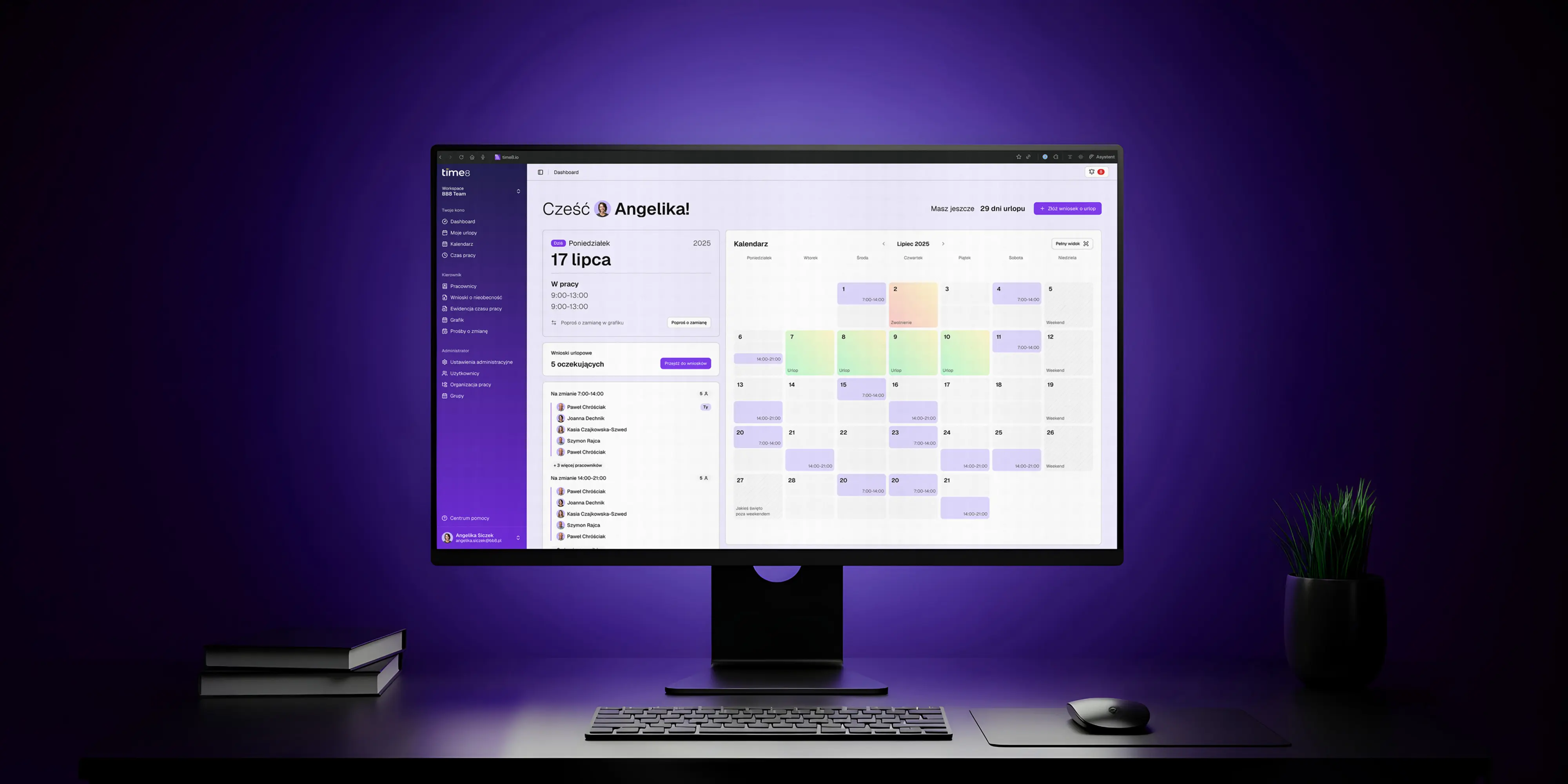
Time8 to produkt SaaS stworzony przez zespół BB8, który powstał z praktycznej potrzeby: wraz z rozwojem firmy zarządzanie informacjami o dostępności zespołu w wielu narzędziach, takich jak Google Forms i Google Calendar, stawało się coraz mniej efektywne. Zamiast sięgać po gotowe rozwiązanie, zdecydowaliśmy się zbudować własny produkt. Cały proces – od pierwszych makiet po działającą aplikację SaaS – zajął około trzech miesięcy przy zespole pięciu osób.
Co stanęło na drodze
Motywem przewodnim projektu było proste, ale wciąż powracające pytanie: „Kto dziś pracuje?”. Informacje o dostępności zespołu istniały, ale były rozproszone w wielu miejscach – Google Forms, komunikatorach i kalendarzach. Zebranie ich w całość wymagało sprawdzania kilku źródeł naraz. Wraz ze wzrostem zespołu ta nieefektywność zaczęła realnie utrudniać organizację pracy, szczególnie przy umawianiu spotkań i koordynacji między zespołami. Dane były zbierane, ale brakowało jednego miejsca, w którym można je było zobaczyć czytelnie i szybko. Dostępne na rynku rozwiązania oferowały nadmiar funkcji przy wysokich kosztach za użytkownika i wymagały przebudowy organizacji, żeby je wdrożyć.
Jak podeszliśmy do zadania
Discovery - pierwszy krok: BB8 Intranet
Zaczęliśmy nie od produktu SaaS, lecz od wewnętrznego intranetu, żeby przetestować koncepcję. Zbudowane w oparciu o Webflow, Wized i Xano narzędzie centralizowało informacje o dostępności zespołu i umożliwiało składanie wniosków urlopowych. Pierwsze makiety i scenariusze użycia powstawały równolegle z developmentem. Podejście no-code okazało się ograniczone – wymagało dodatkowych komponentów technicznych do uwierzytelniania użytkowników, obsługi danych zespołu i logiki aplikacji. Po kilku tygodniach intranet działał i był codziennie używany w BB8, co pozwoliło zweryfikować, które elementy dają realną wartość.
Strategia - od narzędzia wewnętrznego do produktu
Kiedy intranet działał już wewnętrznie, sprawdziliśmy, czy podobne problemy występują poza BB8. Rozmowy z klientami pokazały, że wyzwania z dostępnością zespołu i organizacją pracy są powszechne – informacje rozproszone po kalendarzach, arkuszach, komunikatorach i grafikach zmian. To potwierdziło szansę na zbudowanie produktu dla firm zewnętrznych. Perspektywa rozszerzyła się poza zespoły projektowe o branżę HoReCa, gdzie praca zmianowa i zarządzanie dostępnością pracowników są fundamentem codziennego działania.
Wyjście poza naszą projektową bańkę
Początkowo skupialiśmy się na zespołach projektowych podobnych do BB8, ale badania pokazały, że to zbyt wąska perspektywa. Rozmowy z restauracjami, kawiarniami i hotelami z sektora HoReCa ujawniły, że zarządzanie dostępnością i grafikami zmian ma tam znacznie większe znaczenie operacyjne. Te zespoły mierzą się z ciągłą aktualizacją grafików, komunikacją między zmianami i codziennym sprawdzaniem dostępności. To rozpoznanie rynku ukształtowało koncepcję Time8: umożliwienie zespołom sprawdzania dostępności, tworzenia grafików zmian i sprawnego zarządzania obecnością w jednej platformie.
Architektura produktu
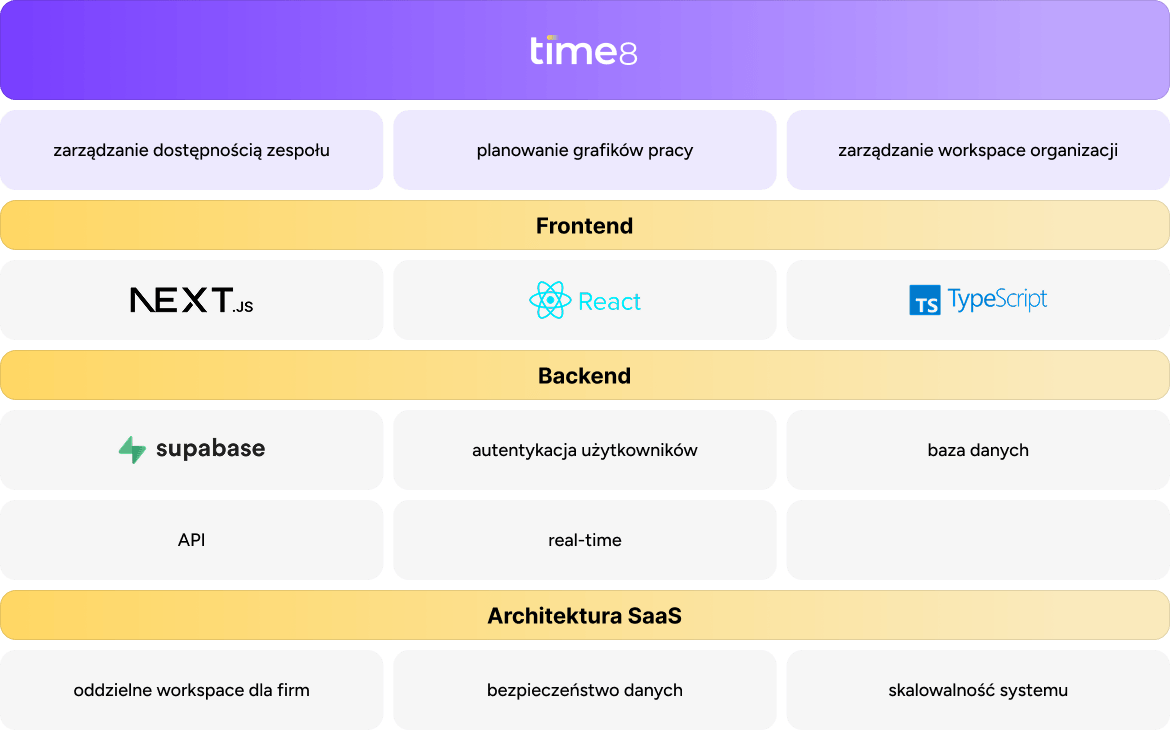
Przejście z narzędzia wewnętrznego do wielodostępowego (multi-tenant) SaaS wymagało fundamentalnych zmian architektonicznych. Każda organizacja potrzebowała odizolowanych przestrzeni roboczych, użytkowników i danych – przy zachowaniu bezpieczeństwa i skalowalności. Stack technologiczny oparliśmy o Next.js i React na froncie, TypeScript dla spójności i bezpieczeństwa kodu oraz Supabase do bazy danych, uwierzytelniania i logiki backendowej. Ta architektura była wypadkową doświadczenia projektowego BB8, eksperymentów technicznych z etapu intranetu oraz nowego podejścia wykorzystującego AI w developmencie.
UX i UI dopasowane do pracy zmianowej
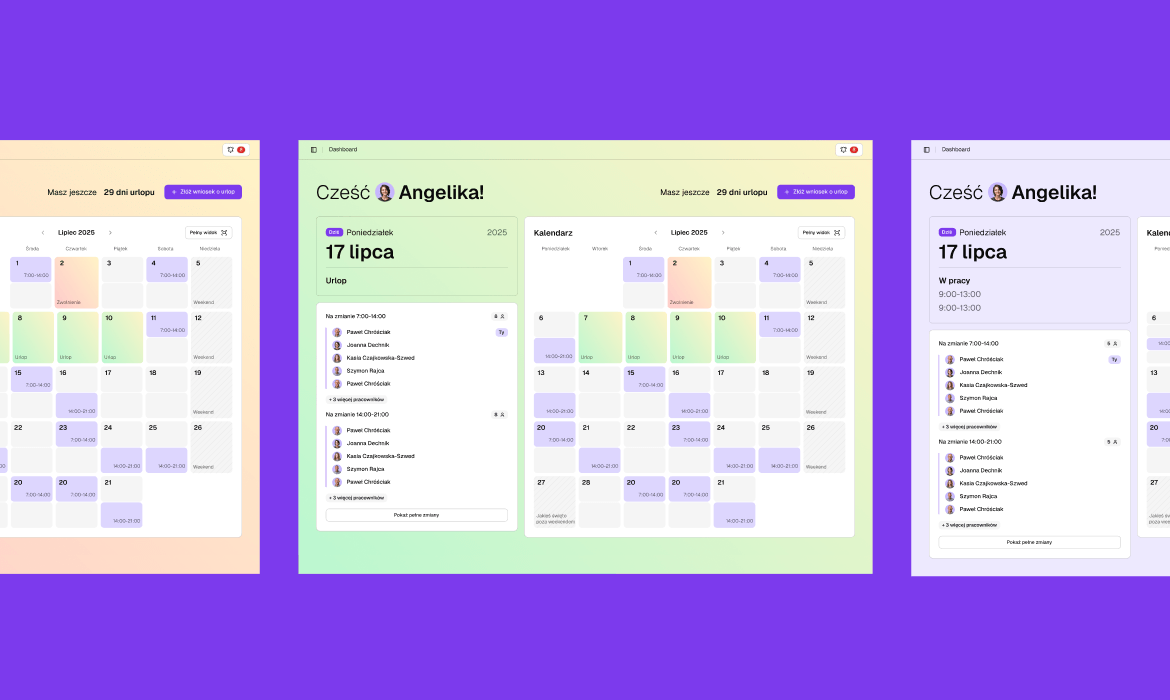
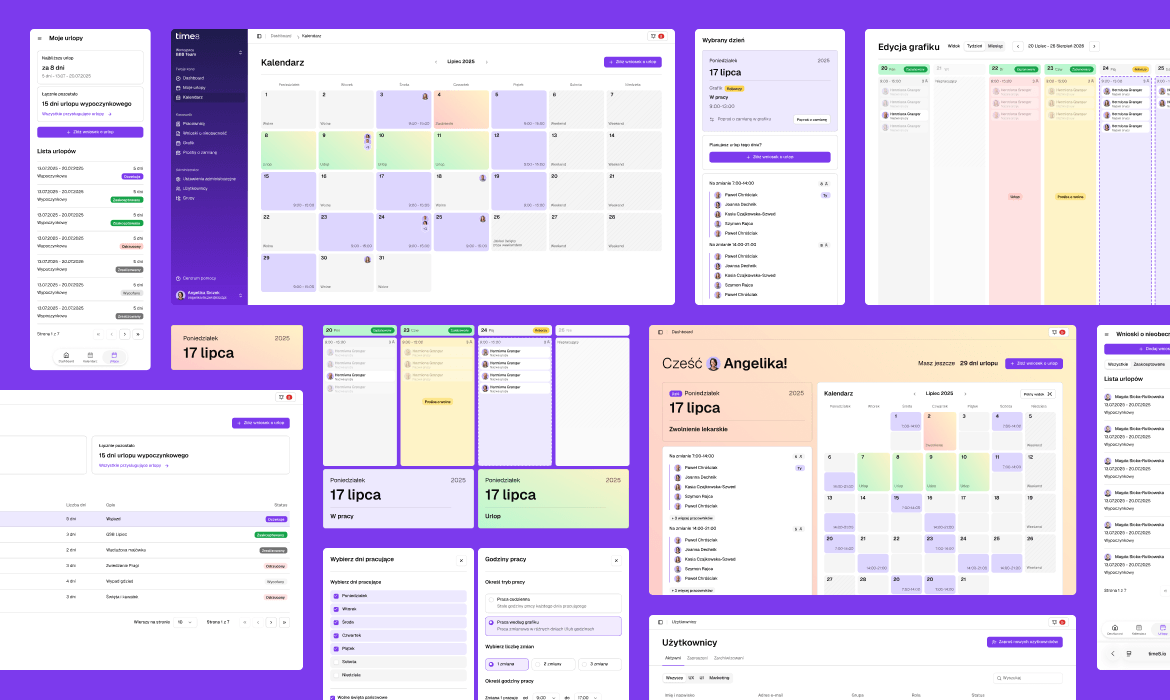
Projektowanie doświadczenia użytkownika stawiało na pierwszym miejscu potrzeby pracowników zmianowych: dostęp do informacji bez przechodzenia przez rozbudowane menu, natychmiastową widoczność statusu zespołu i szybką aktualizację grafików. Prace projektowe w Figmie objęły kluczowe scenariusze – tworzenie przestrzeni roboczej, zapraszanie członków zespołu, zarządzanie dostępnością i planowanie zmian. Szczególną uwagę poświęciliśmy czytelnemu prezentowaniu dostępności zespołu i możliwości szybkiego wprowadzania zmian. Projekt UI powstawał z myślą o wdrożeniu, tak aby komponenty mapowały się bezpośrednio na biblioteki frontendowe.
Development
Development prowadziliśmy w modelu zintegrowanym, w którym projektowanie i kodowanie pozostawały ściśle połączone, zamiast opierać się na klasycznym przekazywaniu pracy między etapami. Zespół zastosował podejście „AI-assisted product development” z użyciem Claude Code, traktując proces jak ciągłą rozmowę wymagającą planowania architektury, dokumentowania decyzji i iteracyjnego testowania. Ta metoda pozwoliła jednej osobie z doświadczeniem produktowym poprowadzić development bez tradycyjnego podziału na projektanta i programistę. Praca objęła typowe wyzwania SaaS: konfigurację uwierzytelniania użytkowników, integracje z zewnętrznymi usługami, zarządzanie bazą danych i polityki bezpieczeństwa.
Co się zmieniło
Time8.io wystartował jako działająca aplikacja SaaS umożliwiająca: tworzenie przestrzeni roboczych dla organizacji, zapraszanie członków zespołu, zarządzanie dostępnością pracowników, planowanie grafików pracy oraz spójny podgląd statusu całego zespołu. Trzymiesięczny cykl od koncepcji do działającego produktu SaaS potwierdził skuteczność procesu, który wypracowaliśmy w BB8. Pierwsza walidacja rynkowa odbyła się przez bezpośredni kontakt na targach i demonstracje na żywo z osobami zarządzającymi zespołami na co dzień. Produkt pozyskał pierwszych klientów, którzy korzystają z niego operacyjnie. Rozwój trwa dalej w oparciu o opinie klientów i wnioski z wdrożeń – nowe funkcje powstają bezpośrednio z potrzeb i rozmów z użytkownikami.
Zobacz powiązane projekty


Szukasz wsparcia dla swojego produktu?
Kilka minut rozmowy, żeby sprawdzić, czy i jak możemy pomóc.